by John Schertow in Economic News,
Environmental News,
The United Nations
The United Nations Special Rapporteur on the Rights of Indigenous Peoples, James Anaya, has urged Panama’s government to ensure the safety of indigenous peoples, farmers and others protesting against new reforms to the country’s mining code.
Dozens of men, women and children have been injured and arrested since the protests began on February 7, when Panama’s National Assembly was still debating the reforms. Most recently, on February 18, anti-riot units from Panama’s National Police clashed with unarmed Ngobe-Bugle protesters in the province of Chiriqui. At least five people were arrested and several more were injured.
Despite the repeated clashes, the Ngobe are now getting ready for an “indefinite” statewide protest beginning on Feb. 24, 2011. At least 15,000 Ngobe people from all parts of Panama are expected to participate.
In his Feb. 15 statement, unofficially translated to English, the Special Rapporteur comments, “I am aware that there has been a call for new mobilizations for the near future. In this context, I urge the Government of Panama to take the necessary measures to ensure the safety of the people who participate in the demonstrations and avoid acts that may affect their lives and personal safety.”
The Special Rapporteur further points to “the importance of initiating, as soon as possible, a process of consultation with indigenous peoples in good faith, with the goal of finding a peaceful way out of this tense situation and dealing with the root problems of this situation, related to the [reforms]”.
Panama’s National Assembly’s approved the reforms on Feb. 10, giving foregin governments like Canada and South Korea the right to invest in mining projects. The government says the reform will be be a major boon to Panama’s economy.
The Ngobe fear that it also paves the way for new mining projects on their lands. They are especially concerned about Cerro Colorado, a huge mountain located on the Ngobe’s ancestral lands in Western Panama. Cerro Colorado is believed to hold one of the largest copper reserves in the world.
Government officials say the refom won’t endanger Cerro Colorado or any indigenous lands in Panama. However, in March 2010, Panamanian President Ricardo Martinelli pledged to give Cerro Colorado to the South Korean government. President Martinelli said at the time,”With pleasure we will change the [mining] law… I want the Korean government [sic], together with the Canadians, North Americans and the stock market, to develop this mine [at Cerro Colorado].”
Human rights and environmental groups, workers and university students are also protesting the reforms, out of concern that new mining operations in Panama would threaten water supplies and farmland across the country. Even though their protests have been peaceful, they have also faced of with Panam’s anti-riot units.
To the shock and dismay of international observers, President Martinelli insists that foreign corporations and political groups are behind the protests; a claim that Panama’s Vice President has publicly endorsed.
John Schertow is the Author of Intercontinental Cry, an online journal devoted to censored and under-reported struggles around the world.
Dozens of men, women and children have been injured and arrested since the protests began on February 7, when Panama’s National Assembly was still debating the reforms. Most recently, on February 18, anti-riot units from Panama’s National Police clashed with unarmed Ngobe-Bugle protesters in the province of Chiriqui. At least five people were arrested and several more were injured.
Despite the repeated clashes, the Ngobe are now getting ready for an “indefinite” statewide protest beginning on Feb. 24, 2011. At least 15,000 Ngobe people from all parts of Panama are expected to participate.
In his Feb. 15 statement, unofficially translated to English, the Special Rapporteur comments, “I am aware that there has been a call for new mobilizations for the near future. In this context, I urge the Government of Panama to take the necessary measures to ensure the safety of the people who participate in the demonstrations and avoid acts that may affect their lives and personal safety.”
The Special Rapporteur further points to “the importance of initiating, as soon as possible, a process of consultation with indigenous peoples in good faith, with the goal of finding a peaceful way out of this tense situation and dealing with the root problems of this situation, related to the [reforms]”.
Panama’s National Assembly’s approved the reforms on Feb. 10, giving foregin governments like Canada and South Korea the right to invest in mining projects. The government says the reform will be be a major boon to Panama’s economy.
The Ngobe fear that it also paves the way for new mining projects on their lands. They are especially concerned about Cerro Colorado, a huge mountain located on the Ngobe’s ancestral lands in Western Panama. Cerro Colorado is believed to hold one of the largest copper reserves in the world.
Government officials say the refom won’t endanger Cerro Colorado or any indigenous lands in Panama. However, in March 2010, Panamanian President Ricardo Martinelli pledged to give Cerro Colorado to the South Korean government. President Martinelli said at the time,”With pleasure we will change the [mining] law… I want the Korean government [sic], together with the Canadians, North Americans and the stock market, to develop this mine [at Cerro Colorado].”
Human rights and environmental groups, workers and university students are also protesting the reforms, out of concern that new mining operations in Panama would threaten water supplies and farmland across the country. Even though their protests have been peaceful, they have also faced of with Panam’s anti-riot units.
To the shock and dismay of international observers, President Martinelli insists that foreign corporations and political groups are behind the protests; a claim that Panama’s Vice President has publicly endorsed.
John Schertow is the Author of Intercontinental Cry, an online journal devoted to censored and under-reported struggles around the world.


 Por el respeto a la vida, el agua y la democracia será el lema de una marcha convocada por diferentes asociaciones ambientalistas y de Derechos Humanos de Panamá, que se realizará este domingo 20 de febrero.

 En su la segunda edición Topbrands, el “Libro de las Grandes Marcas en Panamá”, presentado por Grupo Cerca el 27 de enero en el Hotel Miramar Continental, aparecen treinta marcas locales y multinacionales que entregan beneficios a los consumidores superiores a los de la competencia. ¿Cómo se determinó esto?
 Superbrands es una organización independiente, presente en más de 75 países, en los 5 continentes, que promueve la disciplina del branding y que distingue a las más excepcionales marcas. A este reconocimiento sólo puede acceder una marca que haya sido avalada como de gran excelencia por un Brand Council. A la fecha, Topbrands ha otorgado este estatus a más de 10, 000 marcas alrededor del mundo.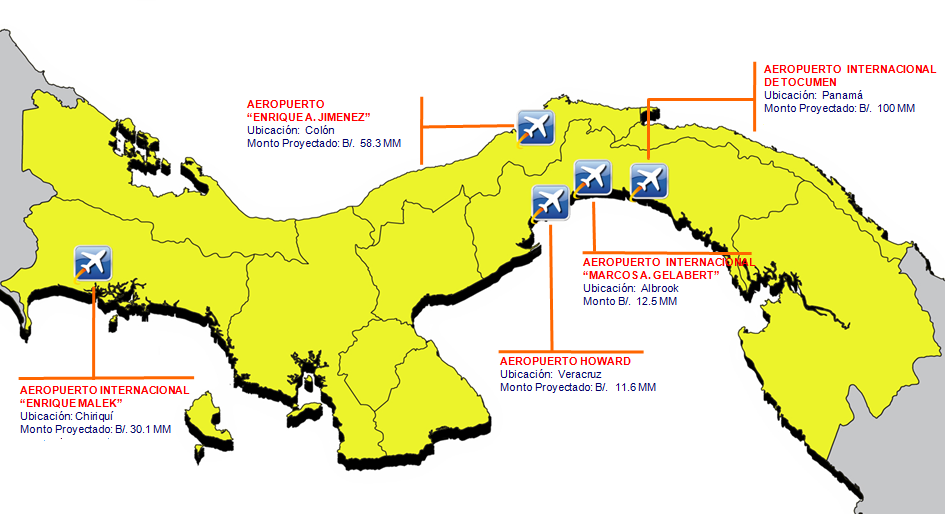
 El Vice Ministro De Lima también explicó que en la ampliación del aeropuerto Marcos A. Gelabert de Albrook se invertirán 12.5 millones de dólares.


